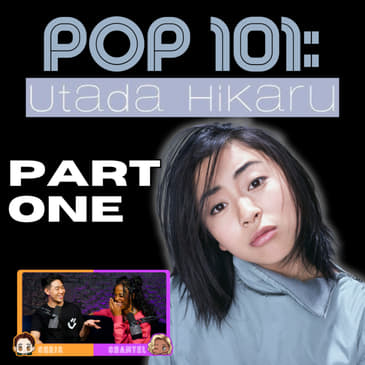
In Part 1 of our POP 101 series on Hikaru Utada (宇多田ヒカル), Chris and Chantel Nicole explore the early career of one of J-pop’s most influential artists - tracing their rise from Cubic U to the record-breaking success of "First Love" and the sonic expansion of "Distance".
We discuss how Utada’s unique background, artistry, and lyrical perspective reshaped the Japanese music landscape, set new industry standards, and laid the foundation for a career that would span decades.
From underground beginnings to instant icon status, this episode unpacks the origins of a legend.
Join us on Patreon!: https://www.patreon.com/CCTVPOPS
Follow us on social media: https://linktr.ee/cctvpops
- 0:00 - Intro
- 1:56 - A Brief History of J-Pop
- 4:52 - The Beginnings, Cubic U and "Precious"
- 6:11 - "Close To You"
- 12:58 - "Automatic" / "Time Will Tell"
- 20:45 - "Movin' On Without You"
- 25:41 - "First Love" album and single
- 33:13 - "Addicted To You"
- 37:50 - "Wait and See -Risk-", "For You" / "Time Limit" and "Can You Keep A Secret?"
- 39:28 - POP QUIZ! Give us your answers in the comments for a shout-out!
- 46:07 - "Distance" album
References:
- “Close To You” (Cubic U) MV https://youtu.be/w3pOdc6i224?si=EwbsM7eDmV13-8Qe
- “Automatic” MV https://youtu.be/-9DxpPiE458?si=8aBT8yqGPUM_qVbw
- “Automatic” Live 1999 https://youtu.be/OTGTqh1w8kg?si=whRESvduf5HOMe9G
- “Movin’ On Without You” MV https://youtu.be/9qU-JVtvXKw?si=5rVv1tpS_7ZI36xt
- “First Love” MV https://youtu.be/o1sUaVJUeB0?si=TD3m8sustCmkkDA3
- “Addicted To You” MV https://youtu.be/h6EqqOiTiwk?si=2PvmPLJQTaalfuhX
- “Wait & See ~リスク~” MV https://youtu.be/zIEf-xJ8VE4?si=MiSTN2uT4VQt0fxs
- “For You” MV https://youtu.be/iJoNSuGpjNc?si=xRcKdcVGTK9AqbB9“タイム・リミット” MV https://youtu.be/evvXqGJk1T8?si=3e0pLl-yBJSqTdrh
- “Can You Keep A Secret?” MV https://youtu.be/SRQbQ_nd4fc?si=xU2xWILIUKS_m2Qw
00:00:00 --> 00:00:10 Imagine being a high schooler and living life as an international superstar that changes the sound of pop for an entire country. Forget Hannah Montana, this is Utara Hikaru.
00:00:13 --> 00:00:43 We are so close to 4 subscribers on YouTube. Yay! Thank you all so much for joining the CCTV crew. And if you're on a podcast platform, make sure to give us that rating and follow and share the episode because it really helps us grow and get into the algorithm. And a big special shout out to our Patreon crew members, Emily, George, Lily, Julianne, Jonathan, Jasmine, Janelle, Darius, Ren, Louis, Hillary, Kelsey, and Ellie. And if you want to join our Patreon, you can go to patreon.com slash cctvpops to support the show and hang out with us.
00:00:43 --> 00:01:06 And this episode and series is dedicated to Darius, who requested us to cover Hikaru Utara. Yes. And Darius mentioned that Utara is known as one of the trailblazers of bringing American R&B-influenced J-pop in the late 90s alongside Double, Crystal K, and then reinvented Namiye Amuro.
00:01:06 --> 00:01:35 Ooh, yes. So this is kind of like our first time kind of getting into J-pop. It's really interesting because we talk about, especially if you're new here, we talk about all kinds of pop. Euro pop, K-pop, Western pop, Brit pop. So this is our first time doing a J-pop. So thank you to Darius. And also, guys, if you want to chat with us, we do go live every month on our Patreon and even here on YouTube. So come join the CCTV crew because we go CCTV live every month.
00:01:35 --> 00:01:53 So yeah, we're really excited. Oh, Hikaru has a very extensive career. All right. But we're going to start part one of their journey from a rare early English language debut to the album that literally shaped modern J-pop. Class is in session.
00:01:56 --> 00:02:25 So before we delve into our primary lesson about Hikaru Utada, let's do a little brief overview of J-pop and its history because we have actually never covered J-pop on this show until now, which is very exciting. But this should help you appreciate the impact of Hikaru Utada in pop music. Please note, though, we do not speak Japanese. We will do our best to pronounce all of these words. Apologies in advance. Yes. Sincerely, Professor CCTV. Okay.
00:02:26 --> 00:02:50 Okay, so starting in the 19th century, Western cultural imports, especially music, found their way into Japan. And jazz became a genre of music that grew in popularity after World War II. And there were a lot of musicians entertaining Western soldiers in bars and cafes. So this movement in music became known as ryokoka, or popular music.
00:02:50 --> 00:03:18 Yes, and eventually in the 50s and 60s, as more Western music developed into familiar genres such as rock and pop, Japan adopted some of those sensibilities and two styles emerged. Kaio Kyoku, which is lyrical singing music, and it combines Japanese and Western writing styles and approaches in genres like rock, jazz, and of course pop music. And you can kind of consider this early J-pop, even though the term was not exactly coined at this point.
00:03:18 --> 00:03:45 And then there was the more traditional style of enka, which focuses more on using pentatonic scales, ballads and nostalgia. And notable artists include Fuji Keiko, Hikaru's mother. Ooh, yeah. So in the 1970s and 1980s, then we saw the rise of Japanese artists who drew heavily from Western musical styles. And this influence ushered in a brand new era, giving birth to genres like visual K and city pop.
00:03:45 --> 00:04:07 think Plastic Love, and ultimately paving the way for idols to dominate the music scene. And in the 1990s, the term J-pop finally came into play. Music sales hit new heights because of the tie-in strategy, which paired newly released songs with various media including commercials, dramas, movies, animes, and video games.
00:04:07 --> 00:04:29 And during this time, rock and Eurodance dominated with producers Tetsuya Kamuro and his TK family, including J-pop queen Namiye Amuro, achieving significant success. And of course, also in the 90s, Hikaru emerged. But we're almost there, we're almost there. Okay. We do have a little disclaimer. So...
00:04:29 --> 00:04:44 On June 26, 2021, Utada publicly identified as non-binary during an Instagram livestream and uses both she, her, and they, them pronouns. So, if we switch between both, it's acceptable.
00:04:44 --> 00:05:02 Yes, it's okay. They say it's okay. She says it's good. We're good. All right, so let's get to their start. So Hikaru Utara was born in New York City and moved to Tokyo at age 11 due to their parents' work. They began writing music early and performed in a family group called You Three.
00:05:02 --> 00:05:19 And by age 13, they launched their solo English language project under the name Cubic U. And they had a few releases, including I'll Be Stronger, which our patron Darius actually has a super rare vinyl single of. Stop. I love that. We love old vintage textbooks. Let's go.
00:05:19 --> 00:05:45 In 1996, Utada recorded the album Precious in New York, featuring R&B originals and a cover of They Long to Be Close to You, made famous by the Carpenters. The album was slated for a U.S. release under EMI, but internal restructuring and executive turnover at the label caused the release to be shelved, limiting it to industry insider. So I guess Darius is an insider. Go off. Okay.
00:05:46 --> 00:06:11 So while working on the album, Utada caught the attention of Akira Miyake, a music producer at Toshiba EMI. Impressed by both their vocals and presence, Miyake suggested Utada be brought to Japan for a formal debut. And this led to Precious being released in Japan in January 1998 under Toshiba EMI, but with minimal promotion, there was modest impact and no charting.
00:06:18 --> 00:06:28 I play that little jingle you know Cubic U what a name pick it's like
00:06:28 --> 00:06:52 It's like, you know, he could have always had a fluid concept of themselves. I think that's very cool. Maybe that wasn't the purpose, but it kind of just sets the scene for like, what the heck is a Cubic U? Yeah. And from, I would love fans to kind of clarify more too. So I believe the family band was Cubic U, but she also released music solo under Cubic U. And then also Cubic U is the name of their band?
00:06:53 --> 00:07:15 So I guess they've just used that name for multiple uses through the years. But some of that could be wrong as well. Okay. Yes. Yes. So, I mean, yes, fans. What are the fans called, by the way? Please tell us, fans. So, you know, I think the interesting thing about this is she was like a child when she released this. A gay maniac. Yeah.
00:07:15 --> 00:07:42 Hickey Maniac is hysterical. Oh my gosh. Hickey fan. A Hickey fan. Well, you know, I know Hikaru as Hickey. I know that one. I thought that was a really cute little name. I think vocally, I got to know them as they were older and not this version. So it's kind of interesting because you can hear that tenderness in Hickey's voice. And there's an emotional texture that I find I hear a lot in Japanese singers' voices. There's this creaky, almost vocal fry, like...
00:07:43 --> 00:08:04 in this. Yeah. It's not going to pick up in this microphone. Sorry, y'all. But I call it kind of creaky or like vocal fry. Like Ayumi Hamasaki. She has like this, I'm getting ready to cry, break kind of sound. And, you know, Hickey has the same kind of sense, a kind of singing style where I go, oh my god, you're really feeling this. So they kind of hear her
00:08:05 --> 00:08:29 hear her singing and then like she'd be so young and i'm like girl i call everybody girl by the way i'm like okay hang on hang on there is something here it just reminds me of that whole like teen r&b thing i was having out here in the u.s you know with like monica brandy alia because a lot of the content was very like mature you
00:08:30 --> 00:08:48 Very mature, yes. No, I honestly had no idea that they got their launch so young. And I had no idea there was this initial kind of US deal involved as well. It's so interesting what would have happened in an alternate timeline if they actually did release it with proper backing in the US first.
00:08:48 --> 00:09:03 Yeah, yeah. You know, it's tough, right? I think the idea of them being Japanese would have been like, oh, that's interesting. A little Japanese girl singing R&B with that. What is that about? But like, let's be honest, I think in its earlier stages. Yeah.
00:09:04 --> 00:09:32 The concept of hickey, the sound of hickey wasn't strong. You can hear a little bit, like the notes aren't completely in control. The vibrato is not being used in a way that's like, okay, yeah, we got training here. And it's fine. You have to grow. You have to, I mean, I remember my first couple of songs I wrote, not the ones I released finally, but the ones I wrote, they dim in comparison in terms of like lyrical content. I was thinking about some stupid stuff.
00:09:32 --> 00:09:49 But singing about love and how you feel, even someone cheating on you with this random black man's voice on it on occasion. I think it's very interesting. Like, it's like, I have some highlights, right? Like, was it 100 Reasons? It Reminds You of Alia?
00:09:49 --> 00:10:19 And I remember that Hickey had an interview with Alia because I was a huge Alia fan. So I knew about that interview. And it was so funny because they were talking about Hickey being so, like, young and, like, where are you going to go for college? And Hickey's like, I'm going to go to Columbia, maybe. They did go to Columbia and then dropped right out and became an international superstar. But it's just songs like that. I'm like, interesting. Yeah. And you have precious love. I'm not going to lie. The whole, my precious, my precious.
00:10:19 --> 00:10:44 backing group i was like yes lord of the rings yes lord of the golem oh golem my bad it's golem golem and shmeagol no golem and shmeagol oh yeah yeah you're right okay yeah interchangeable one shmeagol's the one that's like my precious golem was like hi i'm fine you're right you're right you know okay okay yeah no there's actually is some decent stuff on the album for sure and yes the voice isn't the most developed here right but
00:10:44 --> 00:11:03 Still emotes really well. Yeah. I would not have thought they were that young when listening to this. I mean, part of that is because it is mature content for sure. Yeah. There are still a lot of tones there. You can really hear the potential. There's a lot. And there's still...
00:11:03 --> 00:11:28 thought put into how everything was executed vocally, which is nice. And I was here for, I believe it's Jamal Hampton, that is the majority of the male vocal on this album. Oh, okay, Jamal, you better go off Jamal. Yeah, I actually appreciated it because, you know, he brought some extra dimension. You know, she wasn't the most powerful at that point. So he was able to kind of do some of these more soulful R&D, you know, ad libs and stuff.
00:11:28 --> 00:11:58 So I was here for that I really liked Take a Little While And Work Things Out as well Both are also mature So I kind of I would love if they revisited this album And just re-recorded it now You know that would be such a cool project And look the single The cover of Close to You Very random but very cool They really did their thing with it And I don't think they ever performed it again As an older person either
00:11:58 --> 00:12:04 maybe not oh you know and if i didn't see anything but yeah honestly it's a cool version of it
00:12:05 --> 00:12:32 Yeah. Yeah. I think Close to You was like one of those songs. I remember when I was younger, I heard a version of Close to You where the two singers was like a male singer and a female singer. And that they sprinkle twilight in your eyes of blue. In this song with Hickey, it was, you know, in your eyes so true. With the song I heard when I was a little kid with the two black singers, she says, but honey, your eyes ain't blue. I was like, what the heck?
00:12:32 --> 00:12:53 So shout out to the Carpenters for being like evergreen. I mean, this song is a classic. Yeah, it's really good. But, you know, it's just I like it. I think having a cover on an early like 90s album or like whatever on a 90s album in general, quintessential. You need to have it. You have to have it.
00:12:54 --> 00:13:16 Agreed. So I appreciate the effort here for sure. But yes, even though I appreciated it, it seemed like the general public wasn't really feeling precious. So after Precious failed to chart in Japan in early 1998, Utada dropped the stage name Cubic U and introduced themselves under their real name written as Utada Hikaru in Japanese.
00:13:16 --> 00:13:37 They stayed in the same label, Toshiba EMI, but then shifted direction. Instead of continuing with an English language R&B album and project, the label encouraged a Japanese language debut that leaned more into Hickey's unique position as a bilingual teen who could write and compose their own music. And this rebrand was brilliant.
00:13:37 --> 00:13:58 In an industry dominated by idol groups and manufactured hits like the ones we mentioned, a 15-year-old singer-songwriter with creative control was practically unheard of. Instead of flashy PR, the label leaned on FM radio play and word-of-mouth buzz to promote Utada during this first album era.
00:13:58 --> 00:14:07 So in December 1998, they released their first official Japanese single, which was a double A side of Automatic and Time Will Tell. Music
00:14:18 --> 00:14:44 Both tracks were written and composed by Utada, and both were immediate smashes. Automatic, as noted by our patron Darius, is considered one of the most classic JR&B songs of all time. And both songs were tied to major Toshiba TV ads, and combined they sold over 2 million copies across different CD formats, making it one of the best-selling debut singles in Japanese music history.
00:14:44 --> 00:15:10 Hello. Oh, my gosh. That's crazy. Can you imagine? Like I said, you're in high school. You're taking quizzes. And then suddenly, is that your voice on the radio? Yes. On that Toshiba ad? On the Toshiba ad, right? Listen, tie-ins were the thing, okay? Love that. Because right now we see it with Cat's Eye in the Gap commercial, right? So you think of Cat's Eye. You think of Milkshake. You think of Gap. The Amy Hoodle Doodle. Automatic. When I think of the music video, I think of that yellow loveseat.
00:15:12 --> 00:15:40 Yes. The warm colors and then the crimped hair. Like the blue wall and the white coat was there, but like the first couple scenes, honey, that yellow love seat, I love it. So like you can see that there was some influence on like the way American videos were styled for sure, right? You got to kind of see what the chicken is doing if you want to be a good egg, right? And I think they did a decent job of making sure that even though the song automatic...
00:15:40 --> 00:16:01 sounds like, you know, when someone touches you and they call you on the phone, even when you're far away, you're talking to each other on a computer screen, their words still touch you and your heart goes doki doki. At least they kept it, you know, age appropriate where she's just on a couch. They're just hanging out in a raincoat, you know what I'm saying? So I appreciate that. And again, it's just so interesting to kind of hear...
00:16:01 --> 00:16:18 all this R&B when you have this Eurodance, like this rock sound that's coming out of pop and then like the idols from yesteryear were just singing about love, talking about stay with me. You know what I'm saying? Like this is something different. I think for me,
00:16:18 --> 00:16:38 The way they sound is so much more developed here. And even though it was self-composed and self-written, all the stuff like that, you can tell there was a hand. The arranger is there. So if someone's producing something, yeah, they're making the beat, but the arranger puts it all together. So they're like, hey, listen, this is a great part. Let's make it the bridge. This bridge here needs to be the chorus. They make it sound like something so it's...
00:16:38 --> 00:16:59 radio ready or like pop friendly or whatever it needs to be. It's ready for, right? So I think those refinements really did help because you can hear that vibrato now. You can hear the influences of that soul and R&B that they love so much. Now being mixed with this Japanese kind of
00:16:59 --> 00:17:28 I don't want to say style of singing, but there is a certain tone that I mentioned. I think you've noticed. Have you noticed it before? Oh, yeah. Certain singers kind of sound like they're on the verge of tears. I'm like, ooh, you're so emotional. How you doing that with your voice? It's a natural thing, and it just sounds really good. So when she is singing about love, you believe it. When the low notes come, it's like, oh, there's that little bit of soul that you learned. We like this. I will say it's interesting listening because...
00:17:28 --> 00:17:46 I'm not sure if you notice it either. There are some notes here and there that I'm like, is this flat? On occasion. And it doesn't mean that they're a bad singer. But it's just certain things that happen to stay on the recording. And I'm like, I don't hate it. Yeah, they kept it quite raw. Yes. The whole album, actually. Yeah. Yeah, totally. I think it's interesting. I think it's interesting.
00:17:46 --> 00:18:08 Yeah, I think that was kind of just the style back then, too, where it was just, it didn't need to be as perfect. Colished, yeah. Yeah, because I think that kind of, because of the way she emotes and she has that kind of, that breaking tone, that singing style that you were talking about, I think that almost...
00:18:08 --> 00:18:24 lends itself to you always not being exactly on each note because you're just too in it you know what I mean yeah yeah and so I think it works because it just sounds more emotional that way yeah and and here yeah I agree the voice is definitely developing for sure like even that belt
00:18:24 --> 00:18:48 even for that hook right it's a little more there's it's there's more open yeah it's more open there's more support there yeah and yeah the song is really great great melody super catchy uh and yeah i think the production's fun like it's kind of on the same loop the whole time but it has that kind of breezy kind of groovy thing going for it yes
00:18:48 --> 00:19:07 So you totally see if, you know, Japanese pop was taken over by, you know, kind of more city pop type kind of very like bubbly stuff. Yeah. I could see why this was very refreshing at the time. Yeah, it sounds cool and things like that. Yeah. And even the performances from that time...
00:19:07 --> 00:19:33 so effortless like just just feeling the music like it's not choreographed like they're just kind of vibing the whole time and actually yes good live vocals oh my god yes the mtv unplugged i was thinking i was like oh that was from a few years later but yeah oh this is true but yeah but for example like an mtv unplugged like that i was just that's when i watched and i was like i said i saw that they looked older right yeah but i was like i want to hear what it sounds like without all of the
00:19:34 --> 00:19:43 You know, zhuzh and blah, blah, blah around it, you know? And it's, again, it's one of those things where it's like, wow, I don't know how you did this.
00:19:43 --> 00:20:05 but it's actually good like i sat here listening to the song i was like automatic the only automatic i know is red velvet this is actually really good too so added to added it to a playlist time will tell is also another one that i was like this is super mature um but it wasn't like i'm trying to be grown it was more like for me sounds like a big sister an older sister trying to tell you that things will be okay
00:20:05 --> 00:20:20 You know, because the lyric was about like, I wouldn't say like a youthful existential crisis, but kind of it's just like, hey, you don't know what's going to happen in life. Like I worry about what's going to happen in my own life, but it's okay. Let the time unfold in its own way. You know, major, major daijoubu vibes, you know? Yeah.
00:20:20 --> 00:20:43 Oh my gosh. Yeah, I really like Time Will Tell also got added to some playlists. I think the chorus melody is great. There's a lot of dynamic to just the way the melody is written. And the production is nice too. Yeah, very American, you know, R&B, which is why I think it's more accessible for us. Yeah, it's good. Deserves the hit status for sure.
00:20:43 --> 00:21:06 Yes, absolutely. Following the massive success of the first single, Utada released their next single just two months later, and it was called Moving On Without You in February 1999. Utada wrote, composed, and produced the entire track themselves.
00:21:07 --> 00:21:32 And moving on, Without You went straight to number one on the Oricon chart and sold over 1.2 million copies. It was also used in a commercial for NTT Tokumo, keeping Utara's visibility high in the lead-up to the album. Sheesh, another commercial, huh? That's nice. Okay, so now we get into some house influence. Oh, yeah. Which is fun. Some guitars in here, too. I love the guitars. The guitars are my highlight.
00:21:32 --> 00:21:48 Yeah, so I love that I love that they were able to show another side Of themselves early on It wasn't just like, oh, Automatic and Time Will Tell Did so well, we want more of those Give us derivatives, it wasn't that It was, let me show you another side
00:21:48 --> 00:22:05 now and we're gonna go dance you know um dance on someone's life yeah this is fun i have the harmonies in here i like the structure of the whole song yeah it's just so impressive that they were that young yeah i'm just doing this completely by themselves basically
00:22:06 --> 00:22:30 That's insane. It's impressive. She was like, what? Maybe like 16, 17. Not even. It might still be 15 here, honestly. Yeah, 15. Legit 15. My bad. She interviewed Aaliyah when she was like 17. But yeah. Yeah, I know. It's crazy. But yeah, I think it's cool because this was the only, like one of the only tracks, if not the only, one that...
00:22:30 --> 00:22:52 their father and Akira Miyake didn't like really have a hand in. It was just solo dolo, here's the demo tape, let's make it hot. You know? Like... Can you imagine? You're at school, you're taking a stinky little test, and then this is like the hottest song in your country? Again, forget Hannah Montana, who's Hickey Montana.
00:22:52 --> 00:23:22 picky Japana. It's amazing. It's absolutely amazing. Like, I feel like with this song, like you said, it wasn't super derivative of like the slow, vibey situation. It's like, here's some sass. Here's some attitude. And I love that because again, with the house that was really hot at the time, you had Robin S with like, Show Me Love. You had Crystal Waters and all they did was give you sass and a little bit of a twang, you know, the gypsy woman. I did not know Crystal was singing about a homeless woman.
00:23:22 --> 00:23:23 Yeah.
00:23:23 --> 00:23:53 But it was just so fun. Like house music now, I think depending on where you're hearing it from, if you're not thinking like early, you know, innovators, it's pretty like, oh God, house music again, or like tropical house or like EDM. But the early house, you had Diva singing on it. And she gave me Diva. I'm very happy. I'm very, very happy. Oh my God. It's so good. This music video was fun too. The random props to the silver chair. It was just like, make this look futuristic, but it just has age.
00:23:53 --> 00:24:16 so you know funnily it has aged very funnily um but the song is very much timeless because her rival well not okay okay the labels made it seem like these two are rivals but they were really like serious rival but ayumi hamasaki actually covered this song and it sounded more like poppy edmi and it's like that's how you know you wrote a hint
00:24:16 --> 00:24:35 When the melody, I miss the beat. Come on now. The melody is that catchy where it can kind of just float into another style of music without losing its melody. You know, it's getting Dolly Parton and Whitney Houston, but Hickey is still Whitney in this situation. Yes.
00:24:36 --> 00:25:03 Okay, so in March 1999, Utada released their debut album, First Love. And in its first week alone, First Love sold over 2 million copies and went on to become, and still is, the best-selling album in Japanese history, with more than 7.6 million copies sold in Japan and over 10 million worldwide. And the album would go on to earn numerous accolades. It won the Japan Record Award for Best Album of the Year,
00:25:03 --> 00:25:09 and swept four awards at the 14th Japan Gold Disc Awards, including Song of the Year for its title track.
00:25:10 --> 00:25:37 That is so funny. It still is. It still is. With First Love riding high, Tsushima EMI reissued Precious in March 1999, complete with fresh packaging and positioning it as Utada's early Lost album. And while there wasn't a major promotional campaign, the reissue rode the first wave of First Love's hype and sold over 700 copies, reaching number two on the Oricon chart.
00:25:38 --> 00:25:47 Then, in April 1999, the title track, First Love, was released as the third and final single and was used as the theme for the TV drama, Majo no Toki.
00:25:51 --> 00:26:17 I came on this stinking episode before we started filming, singing this song, y'all. It's a hit. This is coming from your co-host, Professor. It's such a beautiful melody. And as they've been performing it through the years, I don't know if you saw it. They've actually recently done a new live version and it's on YouTube. Oh my gosh. Like their vocals are just...
00:26:17 --> 00:26:44 thrown so much oh gosh uh that song is so good um but yes the album i not really like this album not bad and you know like i said with the third you know the third single being you know not a derivative of the first double a side yeah the whole album is actually there's a lot going in there yeah
00:26:44 --> 00:27:11 There's a lot of different sounds in there. Every song really stands on its own. It is a natural progression from what Precious was. But again, you know, they were completely, fully creatively involved. And there are a lot of highlights on here. Darius, our patron, wanted to make sure that we mentioned In My Room. And BNC as his favorites. Wait, BNC?
00:27:12 --> 00:27:39 Bonnie and Clyde. No, no. I know B and C. I really didn't like that one. Darius, I'm so sorry. Oh, interesting. Because for me, that was also one of my top ones. I don't know. For me, it didn't stick out to me like crazy. Maybe I need to listen to it again. Right? I was driving around. You know what it is? That instrumental makes me think of some of Mariah's lighter stuff. Oh, my God. Okay. Yeah. All right. It's valid. So it just felt very nostalgic for that. I'll listen to it again. I'm sorry. Yeah. Well, some of the other ones, I really liked Painted Black.
00:27:40 --> 00:28:00 Oh, yeah. Such an interesting structure and melody. It's got this, like, hip-hop beat, this heavy bass line, got some funky horns in there. Then you also have Never Let Go, which, of course, samples Stings, Shape of My Heart, which, you know, we talked about the Sugar Babes on here. They also sampled that. Craig Davids also sampled that. That song is a...
00:28:00 --> 00:28:19 That's popular. It's like water. It's the gift that keeps on giving. Ice, you know, vapor. Yes. Water. Yes. And then, yeah, the title track, oh, first love never gets old. Such a beautiful, beautiful melody. Yeah. Yeah, their vocal execution...
00:28:19 --> 00:28:48 Yeah, throughout the whole thing, you really get to hear more tones in there. Again, there are moments where it doesn't feel the most stable support, but it just feels so like they're just giving their all into this thing. And like, regardless of whether it's like love or whether it's like anger or anything, it's like they're just giving their absolute all into it to the point where like they're run out of breath, you know? Oh my God. Yeah. Yeah, totally. I know what you mean.
00:28:49 --> 00:29:06 You know, I hear so much of Aaliyah on this. And it's like the first album, although mildly cursed because of our smelly, the R&B, the harmonies, the style of singing was because...
00:29:06 --> 00:29:26 Aaliyah would use her lower part of her voice and kind of do some runs here and there, but she was always kind of trying to sing a little bit lower, a little bit deeper, so she didn't betray her age. And I think this is something that's also happening here. I will re-listen to Bonnie and Clyde again, but I can't say I remember it right now, and I do apologize for saying I didn't like it. It's just because I don't remember it as much as I shouldn't like it. I apologize. We all have different tastes.
00:29:26 --> 00:29:54 Whatever. But I can't remember it. It's not fair to Bonnie and Clyde. But I remember listening to him and be like, I don't know how I feel about this. But I digress. Maybe, maybe I made a mistake because the songs kind of are long and they bleed into each other. So maybe I wasn't listening to B and C. Maybe I was listening to something else. I don't know. This album reminded me of how long songs used to be. It was so interesting listening to this project. Some of the songs are like four minutes, five minutes, and they're just vamping and vocalizing. And that's where I'm hearing...
00:29:55 --> 00:30:21 the influences that I'm talking about earlier. I think the youth of the artist plays a role in the delivery. Like I said, Aliyah was trying to sing a little bit deeper. Maybe she'd have like some little more flittier voice of vocals when she was singing in her falsetto or in her head voice rather. And it was a little bit more prettier and a little bit more angelic. I think with this one, the harmonies are very traditional R and B. They're not really high. Um,
00:30:21 --> 00:30:28 I think this is definitely an evolved version of Precious for sure. And I think that...
00:30:28 --> 00:30:52 There wasn't any other distinctive production collaborators, so I don't really know their sound, but I know Hickey's sound at this point, right? It sounds like the 90s R&B that they grew up listening to, and I don't dislike the album because of that. I think it's great because it's like, you have this project, got your feet wet, now we're fully in, we're swimming, we're diving. In My Room is great. The lyrics are actually really deep.
00:30:52 --> 00:31:08 um talking about how you're changing who you are and what you're doing in your life to impress someone and they probably don't even know you exist but when you're in in your room and dreaming about them you guys are together i think that's very sweet very limerent kind of song before we had a word for it um first love
00:31:08 --> 00:31:25 The rubato, this is where it was coming out here. The little wobbly, you know, quiver like a cello situation that was happening. I'm like, this is nice. Because it sounds like nostalgia. It sounds like, you know...
00:31:25 --> 00:31:53 not regret, but it just sounds like I miss this person. Great delivery. And then, like, low notes throughout this album, they sound shallow, where it sounds like they're out of breath. Sounds like she's trying to catch her breath, and maybe the tears are getting choked up in her throat. There's a frog there, and they need to get it out. So I think, overall, believable. And whatever Japan was going through in 1998, y'all, I mean, 1990, yeah, 1998, I'm...
00:31:53 --> 00:32:16 1999 as well. Whatever y'all were going through, sorry. Whatever y'all were going through during that time. Ooh. I'm telling you, it's always indicative of what everyone's feeling and thinking. I feel like when a certain album does really well, like SZA during a certain time, her album was hitting like number one. I think it was Control. All the girls are sitting and getting played by somebody. And I'm like, dang, it's toxic out here in these streets. I'm like, dang, nobody. Okay.
00:32:16 --> 00:32:41 Y'all were feeling the love. Y'all were feeling the R&B thing. Whatever was happening. Like you said, maybe they just wanted something fresh. Maybe y'all were just thinking about your first loves. I don't know. I do wonder what the, aside from like maybe a younger demographic, if a lot of adults were really vibing with it too. You know? Because I don't know. Does Japan have like an AC radio situation? Because we're saying Oricon chart. But like, is it like sliding like the billboard? Like categorized like we are here?
00:32:43 --> 00:33:08 I would think this is more like how we think of like the Billboard Hot 100. Right. So it still does lean more young. Yeah. So that makes sense. Well, shoot. He had a bunch of young people talking about some first love. Y'all five. I love that. Love that. But you know, solid first, like solid first debut major label album. Yes. Because the cubic moment, she was cute. But first love? Mm-hmm.
00:33:09 --> 00:33:37 Hello, we're here, we've arrived. Yes. Okay, so Utadas then spent the rest of 1999 focusing on finishing high school. Oh my gosh, that's crazy. But they wrapped up their final summer as a student with some very cool activities, including a charity concert with TLC and Monica, which is available in full on YouTube. And yes, I did watch it. A video concert filmed in New York. And importantly...
00:33:37 --> 00:33:45 They traveled to my hometown of Minneapolis to work with Jimmy Cham and Terry Lewis on the next single, Addicted to You.
00:33:50 --> 00:34:17 The single was released in November 1999 as the first single from the second album. Addicted To You debuted at number one on the Oricon singles chart and went on to sell over 1.78 million copies, making it one of the best-selling physical singles in Japanese history. And our patron, Darius, wanted to call out Underwater Mix of Addicted To You, which samples the same guitar loop that Janet's That's The Way Love Goes Yon.
00:34:17 --> 00:34:27 uses. Hello, Jimmy Jam and Terry Lewis. They said we're going to reuse this lick. They're like, this is a different country. They don't know. Basically.
00:34:27 --> 00:34:52 But it actually is really good, though. But it's just so funny. It is. Also, yes, the underwater mix, I think it's actually better. So very interesting. At least it's available everywhere, you know? Yes. It's on the single. Now you get the sleekness of Jimmy Jam and Terry Lewis, which really, really works here. The song is super smooth. And now that she's getting older, you get a bit more attitude in the vocal execution as well. Yeah.
00:34:52 --> 00:35:17 yeah and it's just such a great chorus like i feel like i say this with everything but you can just tell each line that there's so much thought put into the vocal execution of it yeah where to put more support where to make it more breathy where to kind of let it trail off where like it's it's it's kind of amazing actually to listen to um and then the music video too way more confidence even as a performer as well
00:35:17 --> 00:35:47 Oh my gosh, yeah. All I could think about was the tan skin and the brown hair. It looked amazing. I was like, oh, I'm with you little... I mean, there's not much going on in the music video, and the settings don't really make sense for the song. But, you know... They're doing the thing. Yeah, I think at this point, even though the video doesn't feature dancing or anything, like, oh, somebody's dancing. We don't know who the... We don't know who the silhouetted shadow is. It was interesting to watch the video, because remember those glass walls that have, they're all squared out?
00:35:47 --> 00:36:16 like little pixels oh god just looking back on that is so fun and i love the outfit the black dress with the gloves i don't i think i i think whoever was trying to figure out like the styling was trying to get hickey away from this gap commercial vibe from the first um i know i can bring up the gap that's like the first thing in my brain but if you think about the visuals from like that first project um but first love and and um time will tell like time will tell
00:36:16 --> 00:36:45 It looks like a Gap commercial. Like the red hat, you know, the jeans. It's not bad at all. Automatic, super comfy clothes, laid back. But with this one, you get a leather dress and some gloves. You get straightened hair. It's meant to look sleek. She sounds sleek. Let's give it a nice little, you know, spin on the fashion. But like you said, there wasn't much happening. So I think at least there was, you know, recognizing, hey, he's getting older. Yeah.
00:36:45 --> 00:37:14 but Hickey's not a grown woman yet, or a grown adult yet, rather. So let's just try to make it more stylish for the project, but let's not... So I think, although it was a little meh, meh, meh in terms of concept, you can see the effort being put forth not to make Hickey seem like a baby anymore. But not too grown. But yeah, I think having Terry and Jimmy work on your project is a huge, huge upgrade. Yeah.
00:37:14 --> 00:37:43 And just have a song with them. You can... Although you can hear Hickey's, like, personal style in there, the vocal production, if they actually did fly... Not actually. If they were able to work with them, I know for a fact... If they can't speak Japanese, I need you to hit this, like... Hit it like that, girl. Get it like that, girl. You know what I'm saying? Like, they have to make sure it's perfect. Because their name is attached to this. But then it also makes the artist so much stronger. So I think...
00:37:43 --> 00:38:12 It was awesome and it wasn't the end of like the collaboration, which is really exciting because after the success of Addicted to You, Utada didn't slow down. They dropped three more singles leading up to their second album, each track showing a different side of their sound in all of them. All of them were huge hits. Yes. So in April 2000, they released Wait and See, Risk, another collaboration with Jimmy Jam and Terry Lewis.
00:38:14 --> 00:38:32 The single hit number one on the Oricon chart and sold over 1.66 million copies. And then came a double A side in June 2000 for You and Time Limit, which also debuted at number one.
00:38:44 --> 00:38:48 Time Limit was notably produced by Rodney Darkchild-Jerkins.
00:38:48 --> 00:39:15 Dark Child. Yeah. We talk about Dark Child quite a bit on the show. We do. In February 2001, just ahead of the album drop, Utada released Can You Keep a Secret? And it became one of their most iconic singles selling over 1.48 million copies and ended up as the best selling single of 2001 in Japan. And its huge success was partly due to it being the theme song for the drama Hero starring Takuya Kimura.
00:39:22 --> 00:39:36 Pop quiz time, pop quiz time, pop quiz. It's time for a pop. I'm trying to figure out the jingle guys. But anyway, pop quiz time. Yay. So if you can remember a certain thing that we say.
00:39:37 --> 00:39:52 and then answer properly, drop it in the comments below. You get a shout out in our next episode. So keep your ears open, because it's time for your pop quiz. So we have mentioned quite a bit about a method of promotions used during Japanese promotions, right?
00:39:53 --> 00:40:20 The song is synced with various forms of media. What is this term called? Yeah. You got five seconds. Four, three, two. Drop it in the comments. Pop quiz closed. Remember, guys, the first comment that we see with the right answer, we'll get that shout out. So drop a comment and also subscribe. You're already here. You made it this far. Join the CCTV curve. Okay. So first up, wait and see risk. So we get the second comment.
00:40:20 --> 00:40:29 Terry and Jimmy track. This one was fun. I really like this one. I actually think I like this one more than Addicted to You.
00:40:29 --> 00:40:59 dun dun dun hot take but yeah it's got a really dynamic melody and some really great harmonies and you mentioned some you know rock elements being in here I guess you mentioned some rock elements being kind of part of J-pop more so and that's in here actually with this one too so then you do kind of get that mix of you know Jimmy and Terry but also still some J-pop stuff in there as well and then yes the music video we do get the effects
00:40:59 --> 00:41:27 and the flying motorcycle. Yes, multiple hickeys. Now we get a more memorable visual here. Yeah, the flying motorbike. Where do I sign up for that? Where do I sign up for this version of the future? You might get there soon. Shoot. I don't know about the flying part. People don't know how to drive now. But yeah. So I think, again, shout out to the arrangers. They made sure it made sense for J-pop. Because you can have all this Western influence, but if...
00:41:27 --> 00:41:44 people don't feel like they can connect with it, then you kind of lost your crowd there. But again, found that beautiful balance, beautiful, beautiful balance. And I think to have such a concept of one sound is key. So to be able to repeat the same vibe or like vocal, vocal,
00:41:45 --> 00:42:05 continuity, ha ha! I think that was the secret sauce because the producers change, right? Like you said, we had Japanese producers, we had Hickey producing, we have Jimmy Jam, we have Dark Childs, but it still sounds like Hikaru was making the song. It wasn't like, I can't sing the song, it's not my song. You know what I'm saying? Yeah.
00:42:05 --> 00:42:30 No matter who covers it, you'd be like, oh, okay, that's a hickey song. I think moving right on to like time limit. It is so, so good. I enjoy it. You can hear. Dark child. Oh, my God. Yes. You can hear more control in the belt. And I think that's so important. Again, you have people vocal producing you and wanting nothing but the best because that's who they've worked with in America. It pushes you. It helps you develop.
00:42:30 --> 00:42:45 even a better vocal, a better concept of how you want your music to sound. It's really cool. There's a belt before the bridge and then you get this big moment. It's just having a song has been five minutes and it can still kind of just feel like
00:42:46 --> 00:43:11 you want to listen to it. It doesn't feel long. Yeah, these songs do not feel long at all. And that's the thing. I kept looking at the time. I was like, it's five minutes? What the heck? So, I mean, again, the song is timeless, timeless, considering that's called Time Limit. Yes. Yes. This is definitely one of my favorite singles of theirs, I think. And yes, again, yeah, it still sounds like Hikaru, but you get this kind of dark child thing.
00:43:11 --> 00:43:34 signature style in there as well even in the vocal arrangement with the layering and even the way it's mixed and everything is just so him yeah and so it's cool to to have him work you know with an asian artist like i love that these artists were so up for it you know oh my gosh yeah you know i feel like back in the day it felt
00:43:34 --> 00:43:52 I don't know. I feel like people maybe weren't as open about that. You know, I think it's interesting. I think in K-pop, there is like this weird, like, especially with the fans, this weird, like, not all the fans before you guys get upset, but there is this weird, like, a lot of people have nothing to do with this, even though there's a rapper in the group. I'm like, where do you think it came from? But with,
00:43:52 --> 00:44:18 a lot of j-pop it's like jazz influenced us here like we like rock we we really like rock here we love the rolling stones or the beatles there was a beetle craze or the rock ability why is there greaser japanese people walking because they see it they respect it they want to learn more about it um so same thing here it's like you have these influences being embraced because there was a
00:44:18 --> 00:44:36 came from here. I want to take it and make it my own because I know I'm not in America, but I want people to hear what I fell in love with. And I think because that happened, now you have this giant moment where you loved it. Now people love it for you and for them and it's changed the way the music has sound. So I think it's really cool. Yeah.
00:44:36 --> 00:44:55 And yeah, it's good that they have such a distinctive style, both vocally and just in their songwriting, that you can tell it wasn't just someone got a dark child demo and they just sang on top of it. It was very clearly, you know, Hikaru's song.
00:44:55 --> 00:45:24 Yeah, it feels very bespoke. Yeah, totally. Totally. And then, oh my gosh, can we talk about the video for Can You Keep a Secret? I know we should talk about the song, but that video was hysterical. Guys, if you know who Cat's Eye is, they have a video called Gabriela. A song called Gabriela. And in the video, one of the girls marries a Waymo car. Higaru was already doing that with Pino. The robot was named Pino. And Pino and Higaru were in love. So again...
00:45:25 --> 00:45:42 ahead of their time. I was just in, I was, I was, I thought it was hilarious. I like, I do like the song as well, but like, I feel like this was like a really poppin on me vibe that was getting popular at the time in the West. So again, still super on trend. Um, that robot hilarious. Yeah.
00:45:42 --> 00:45:59 Yes, very relevant to now. Yes. Oh, my God. Yes. I'm going to be honest. I actually don't love Can You Keep a Secret? I think it's okay. I don't love the chorus melody. There's something about it that just doesn't capture me. But it was a successful single. I know.
00:45:59 --> 00:46:15 Speaking of which, after the hugely successful run of singles, Lutata finally released their second album, Distance, in March 2001. The anticipation was massive and the album delivered.
00:46:15 --> 00:46:31 Distance sold over 3 million copies in his first week, setting a Guinness World Record at the time for the fastest selling album in a single country. It went on to sell over 4.47 million copies in Japan, making it the fourth best selling Japanese album of all time.
00:46:31 --> 00:46:58 And creatively, it showed huge growth sonically as well. And at the time of the album's release, Utada had also just started attending Columbia University in New York City, and as much as possible, they kept a low public profile. They weren't doing the typical J-pop media circuit or constant TV appearances. Instead, they focused on school, avoided overexposure, and let the music speak for itself, which only added to their mystique.
00:46:59 --> 00:47:18 Okay, so the Alia interview when they were talking about colleges and saying, I'm thinking about going to Columbia University. The fact that they went and eventually dropped out, I think is amazing. Good for you. Yeah. Good for you. I'm going to drop two bangers. Y'all going to love them. And I'm going to devout the country. Bye. But yes, distance.
00:47:18 --> 00:47:43 oh boy oh boy oh boy this sounded easy breezy and japanesey i was here for the evolved sense of r&b and then infusing a little bit more that rock element here um i'm not saying that you know r&b is on the extensive genre to like cover and like you know delve into when you're making music but
00:47:44 --> 00:48:13 she was also being very intelligent about the country of origin. Like what's happening in music. You can't be so like dead set on making this your sound for forever. Cause you're not going to really grow as much if you don't try to experiment. And I feel like there's a lot of experimentation on this album. Could have been safe. And like, here's R&B. I have great names. Like you said, I have easy, easily like recognizable names on my album. And still push the envelope a little bit. I think...
00:48:14 --> 00:48:43 Fans could appreciate the older songs that sounded like, like Sunglasses. It sounded like, you know, R&B, but also like their favorite, you know, Janet Jackson track. Drama, super dramatic. It steals the show. We love a rock moment, even though the chorus is not that great. It was still intense. And then you have like the chaotic track, Keto Base, right? That was released as like a B-side, if I'm not mistaken. So it's not just like, here's an R&B song and then we, you know,
00:48:43 --> 00:49:13 We're not going to try anything new. Yet the Bonse is kind of risky. And I think the album title is interesting as well, like Distance. What does Distance mean? But Tata had noted that their songs, the album title Distance kind of reflected the emotional and physical distances involved in the production, right? Like the international traveling for recording, being in Miami, New York, Minneapolis, Osaka, Tokyo. You're being all over the world and trying to make this awesome album. And then it was made. So it just fits.
00:49:13 --> 00:49:40 So I think overall it's not, not at all a bad album. It's a great sophomore effort. And I think the title track, this one sounded very J-pop to me, but also felt like Mariah Carey light because of like the intro sounded like a J-pop song, but then there was like this vintage quality about it. And then the drums were hip hoppy and like, wow, it could have been a single. In my opinion, I think it could have been a single. Yeah.
00:49:40 --> 00:50:04 Well, we'll talk more about that shortly. But before we get there, yeah, the album is great. Like, there's definitely artistic and sonic growth here. There is a maturity developing as well. There is some of that sensuousness there in the songwriting and the vocal execution, too. There's some, you know, slightly sexier...
00:50:05 --> 00:50:25 tones in her vocals and all the production has been elevated as well like if you listen kind of back to back these three albums that we're talking about in this episode everything becomes way more full just a lot more going on a lot yeah it's not as kind of fair as kind of the initial stuff
00:50:25 --> 00:50:55 And yeah, I call that a lot of the same stuff too. It's refreshing to have some new sounds like the rock and kind of the, you know, kind of the weirder stuff. Yeah. You already called out Sunglass. I love Sunglass. Kind of sexy. There's like a synth solo in the middle, which I appreciate. There's also a bonus track called Hayatochi, which has a really great groove. There's a remix.
00:50:55 --> 00:51:05 so yeah that one was a good one too so yeah I really like this album definitely didn't suffer from the sophomore slump
00:51:05 --> 00:51:29 Yeah. I'm here for it. What an awesome, awesome, awesome turnout for someone. Okay. Like, hello. So, speaking of Distance, the song. So there were not any further singles released from the album. Though, Distance was planned to be a single. And it was eventually reworked and released as a brand new version. But, we'll talk more about that in the next part of our Pop 101 series.
00:51:30 --> 00:51:47 That's right, guys. So if you do want a part two where we'll discuss the Deep River era and the global breakout moment with Kingdom Hearts, let us know. Hello. I want to talk about it. You're giving me. Anyway, point is.
00:51:49 --> 00:52:11 I sang the most random part of the song, right? I love that. So, guys, listen. Do not forget to drop in the comments if you do want a part two. Do not break Darius's heart. All right? Also, we're really excited about this. Yeah. We're really excited about this. This is super fun. We're excited. And don't forget to submit your answers for the pop quiz for a chance to get shout out in our future episode.
00:52:11 --> 00:52:38 And let us know what you think of Utara Hikaru's beginnings and first couple of albums. You can also comment below or just message us at CCTV Pops on social media. You can always join us on Patreon for exclusive content and live chats with us as well. And don't forget to like, subscribe, and turn on those notifications for our channel. And if you are enjoying the show, give us a rating, a review, all that good stuff on your favorite podcast platform. Until next time, that's Chris. That's Chantelle.
00:52:38 --> 00:52:48 And you're tuning in to CCTV, the nonstop pop show. When you walk away, you walk away.